
If you own a 4WD, chances are you've added a few extras over the years.
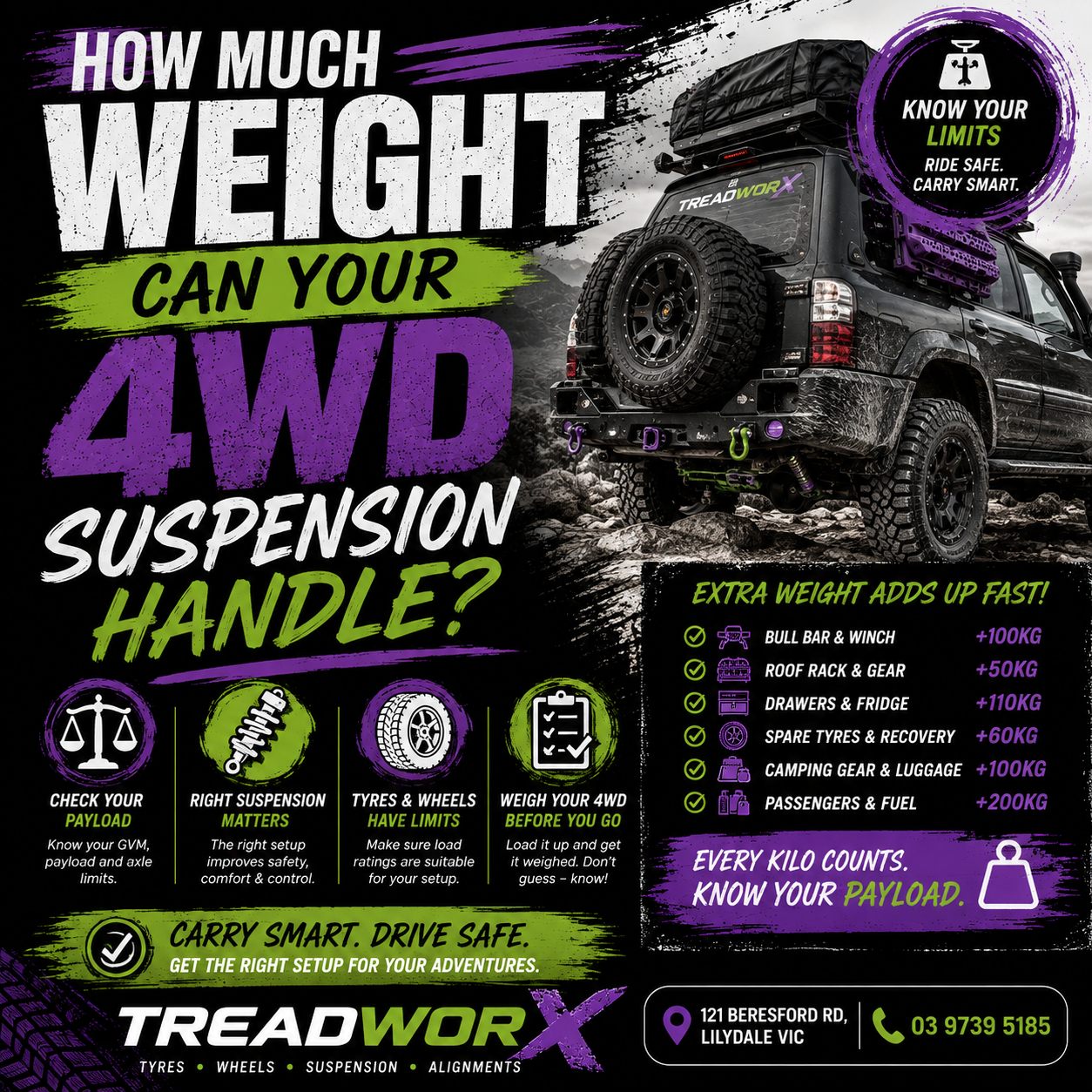
Maybe you've fitted a bull bar, winch, roof rack, drawers, larger tyres, a second spare, fridge, camping equipment or a suspension upgrade. Add a few passengers, luggage and a full tank of fuel, and your 4WD can be carrying considerably more weight than it did when it left the showroom.
But how much weight can your 4WD actually handle?
And does upgrading your suspension mean you can simply carry more?
The answer isn't quite as simple as upgrading your springs.
What is Payload?
Your vehicle's payload is essentially the amount of weight it can carry while remaining within its rated Gross Vehicle Mass (GVM).
Your payload can include:
- Driver and passengers
- Fuel
- Camping equipment
- Luggage
- Recovery gear
- Bull bars and winches
- Roof racks
- Fridges and drawers
- Spare tyres
- Tow ball weight from a trailer or caravan
- Other accessories and modifications
For example, if your 4WD has a GVM of 3,500kg and its actual unladen mass is 2,500kg, that gives you a theoretical 1,000kg of available payload.
But once you start adding accessories and people, that available payload can disappear surprisingly quickly.
Your Suspension Isn't the Only Limiting Factor
This is one of the biggest misconceptions when it comes to 4WD modifications.
Installing heavier-duty suspension doesn't automatically mean your entire vehicle can legally carry more weight.
Your vehicle has multiple weight ratings that need to be considered, including its GVM, axle capacities, tyres, wheels and other components.
In Victoria, vehicle modifications also need to comply with the applicable modification requirements. Changes that affect suspension, handling or other safety-related components need to be carried out correctly and within the relevant guidelines.
If you're considering a major modification or a change to your vehicle's GVM rating, it's important to understand the approval requirements before the work is carried out. Changes to a vehicle's GVM rating can require VASS approval.
How Quickly Can Your Payload Add Up?
Let's look at a typical touring 4WD.
You might have:
Bull bar: 60kg
Winch: 40kg
Roof rack: 50kg
Drawer system: 80kg
Fridge: 30kg
Second spare tyre: 30kg
Recovery equipment: 30kg
Camping equipment: 100kg
Passengers: 150kg
Luggage: 80kg
That's already a significant amount of additional weight.
And that's before you add the weight of a caravan or camper's tow ball onto the vehicle.
This is why it's important to consider the complete vehicle setup, rather than simply looking at how much weight your springs can support.
Why Does Extra Weight Affect Your Suspension?
Your suspension is designed to control the movement of your vehicle while maintaining ride quality, handling and tyre contact with the road.
When you continually carry additional weight, the suspension has to work harder.
Too much weight can contribute to:
- Sagging suspension
- Reduced suspension travel
- Poor handling
- Increased body roll
- Reduced ride comfort
- Increased tyre wear
- Greater stress on suspension components
- Reduced ground clearance
A vehicle that regularly carries heavy loads may benefit from suspension specifically matched to its actual use.
Should You Upgrade Your 4WD Suspension?
If your 4WD regularly carries additional weight, a properly selected suspension upgrade can make a noticeable difference.
For example, if you've added a bull bar, winch, drawers, touring equipment or regularly tow a caravan, the original suspension may not provide the same level of support and control that it did when the vehicle was standard.
A suspension upgrade can be designed around the vehicle's intended use and typical load.
The important part is choosing the right suspension setup for the weight you're actually carrying.
Heavier isn't always better.
A suspension setup that's too stiff for your normal load can make the vehicle uncomfortable and affect its ride and handling. A setup that's too light for a consistently heavy vehicle may struggle to control the additional weight.
What About a Suspension Lift?
A suspension lift is popular among 4WD owners who spend time off-road.
A properly selected lift can provide additional ground clearance and improve the vehicle's suitability for certain off-road conditions.
However, a suspension lift isn't simply a way of increasing your vehicle's legal carrying capacity.
In Victoria, suspension modifications and changes to ride height need to comply with the applicable vehicle modification requirements. For certain 4WDs, there are specific provisions covering suspension lifts and larger tyres.
If you're considering a lift, it's important to look at the complete setup rather than choosing a lift based purely on height.
Don't Forget Your Tyres and Wheels
Your suspension isn't the only component carrying the weight of your 4WD.
Your tyres and wheels also have load ratings that need to be suitable for the vehicle and its operating conditions.
When upgrading your tyres or wheels, make sure the load ratings are appropriate for your vehicle.
The same applies when you're adding accessories or increasing the amount of weight you carry.
How Do You Know If Your 4WD Is Overloaded?
Some warning signs can include:
- The rear of the vehicle is visibly sagging
- The vehicle feels unstable when loaded
- Steering feels different when carrying extra weight
- Suspension bottoms out over bumps
- Excessive body roll
- Uneven or accelerated tyre wear
- Reduced ride comfort
- The vehicle sits noticeably lower than normal
However, you shouldn't rely on how your vehicle feels to determine whether it's within its legal weight limits.
The only way to know the actual weight of your loaded vehicle is to have it properly weighed.
Weigh Your 4WD Before a Big Trip
If you're heading away camping or touring, weighing your vehicle can be a worthwhile exercise.
Load the vehicle exactly as you would for your trip, including:
- Passengers
- Fuel
- Camping equipment
- Recovery gear
- Food and water
- Tools
- Spare tyres
- Towing equipment
Then have the vehicle weighed so you know how much weight you're actually carrying.
This can also help identify whether the weight is being distributed appropriately across the vehicle.
Choosing the Right Suspension for Your 4WD
There's no single suspension setup that's right for every 4WD.
The best setup depends on how you use your vehicle.
A 4WD that's mainly used as a daily driver with occasional weekend trips will have different requirements to a vehicle that's permanently loaded with touring equipment or regularly towing a caravan.
At Treadworx, we can help you choose a suspension setup based on your vehicle, accessories and intended use.
We're an authorised Fulcrum Suspension and Tough Dog Suspension dealer and installer, specialising in suspension setups for 4WDs and touring vehicles.
Get Your 4WD Ready for the Weight You're Carrying
Before adding more accessories to your 4WD, it's worth thinking about the complete package.
Your suspension, tyres, wheels, axles and vehicle weight ratings all need to work together.
A suspension upgrade can improve the way your 4WD carries and controls additional weight, but it doesn't automatically increase the vehicle's legal payload or GVM.
If you're planning a suspension upgrade, adding touring accessories or regularly carrying heavy loads, talk to the Treadworx team first.
We'll help you choose a suspension setup that's suited to how you actually use your 4WD.
Treadworx – Tyres, Wheels, Suspension & Alignments
121 Beresford Rd, Lilydale VIC
03 9739 5185